



Bicycle Fluid Trainer Review – CycleOps Fluid2 vs. Kurt Kinetic Road Machine 2.0.
Click here for a list of all articles on this subject.
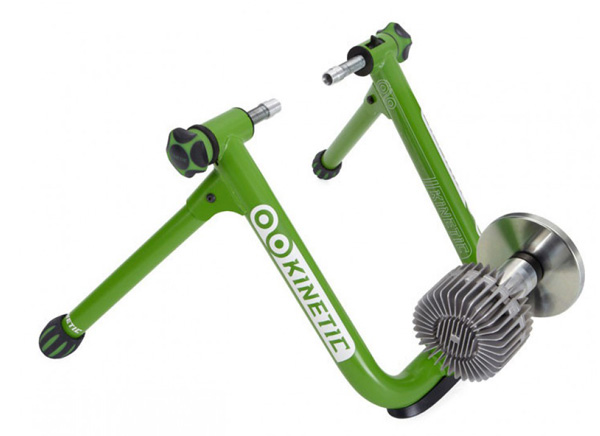
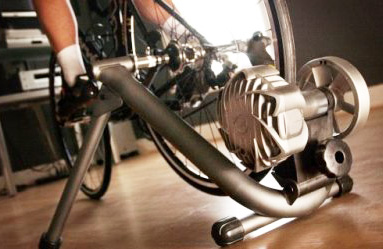 Indoor trainers are an incredible workout – more intense than riding outside in most cases (click here to learn why). While everything from fans to electromagnets are used to create resistance in cycling trainers, fluid has proven to be one of the best methods as fluid provides a linear and progressive torque curve and a huge range of resistance at a moderate price. The CycleOps Fluid2 and Kurt Kinetic Road Machine 2.0 offer some of the smoothest and most progressive resistance available at a moderate price, making them the heart of the value equation in trainers for most riders.
Below is a fluid trainer review of two of the most popular trainers on the market, the CycleOps Fluid2 and Kurt Road Machine 2.0:
Fluid Trainer Defined:
Both the CycleOps and Kurt units use fluid based resistance systems. A fluid based trainer is simply defined as any trainer that uses a viscous fluid, like liquid silicone, in the unit to create resistance.
Durability and Resistance Unit Design:
While the premise behind the Kurt and CycleOps units are very similar, their internal construction is quite different. The CycleOps depends on a thru-shaft that is sealed by an O-ring that keeps the fluid in its reservoir. The Kurt Kinetic Road Machine 2.0 uses a creative magnetic coupler mechanism to eliminate the highest wear area on the fluid resistance unit – the O-ring fluid seal.
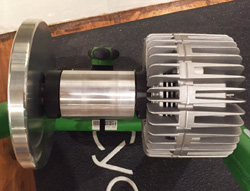 In the Kurt Kinetic Road Machine 2.0 resistance unit, there is a completely sealed and independent housing unit that holds the silicone fluid. This unit attaches to the spinning impeller shaft from the rear wheel via twelve magnets (6 on each side). As the impeller rotates off the rear wheel, this magnetic coupler revolves instead of depending on an O-ring seal like most units. This keeps the fluid completely sealed and independent of the rotating impeller shaft.
The CycleOps Fluid2 uses an open bath construction where the fluid is held in the resistance unit via an O-ring seal 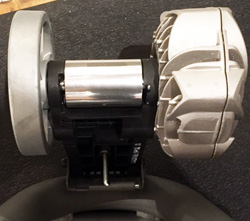 around the rotating impeller shaft. Years ago this meant a potential “weak link” in open reservoir designs like the CycleOps. However, the leakage issues that plagued early O-ring based trainers is a long-time in the rear view mirror at this point. You would be hard pressed to say that the CycleOps O-ring design is any less durable than the sealed magnetic coupler design on the Kurt Kinetic Road Machine 2.0. Besides, CycleOps is a really good company and they will take care of any such issue if it were to happen as the CycleOps Fluid2 includes a lifetime warranty on both the resistance unit and the frame.
While both fluid units function different, both are very reliable and durable designs at this point and both are supported by committed and quality based companies.
Durability and Stability of Frame:
Each of the frames found on the Kurt Kinetic Road Machine and the CycleOps Fluid2 are well constructed. The Kurt Kinetic Road Machine 2.0 frame uses the largest diameter and heavier tubing of the two and thus is initially very stable feeling when you install the bike or when you are riding. The CycleOps Fluid2 frame is a little lighter gauge tubing, but still gets the job done safely and securely. While it is not quite as stable feeling when sprinting or under heavy load as the Kinetic by Kurt, you are going to have to put a lot of effort into tipping over with the CycleOps Fluid2 and some riders may prefer the lighter weight frame for ease of storage and transportation.
Bike Securing Mechanism:
Both the Kurt Kinet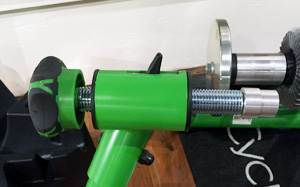 ic Road Machine and the CycleOps Fluid2 use a securing system that is based on rear wheel skewer pressure. The CycleOps unit is the quickest to use as it uses a simple lever that slides until it engages the skewer. The Kurt Kinetic Road Machine uses a threaded engagement system that is big, beefy, and full of machined aluminum (which is no surprise as Kurt’s primary business is in machining for aerospace and medical applications). The Kurt Kinetic Road Machine threaded mechanism is not as quick and easy to use as the CycleOps, but it is very solid and secure feeling.
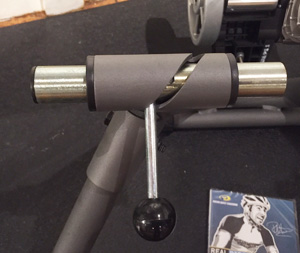 The CycleOps’ unit seems to work a little easier out of the box on a wider range of skewers than the Kurt Kinetic Road Machine, but neither trainer works well with the majority of skewers found on bikes today. With either trainer, you should replace your skewer with a basic steel unit (included with both).
Wattage/Resistance Range:
Both units tested offer plenty of resistance for the vast majority of riders. The Kurt Kinetic Road Machine 2.0 claims to be tested to 3000 watts without thermal failure and the CycleOps Fluid2 offers tested resistance from 20 watts (about 5 mph) to over 800 watts. This is not to say that the CycleOps cannot work up to the 3000 watts Kurt claims to have tested, just that they have not released any test data at these speeds. Besides, testing to 800 watts is very realistic test as your average strong athlete averages between 200 and 250 watts. So, while we don’t know the high range on the CycleOps Fluid2, the CycleOps Fluid2 has a power tuned (remember, CycleOps and PowerTap are the same company…) resistance range that easily exceeds 1000 watts.
Why does having an adequate wattage range matter? As the wattage increases, so does the heat demands on the resistance units of the fluid trainer. The bottom line is that both the Kurt Kinetic Road Machine and CycleOps Fluid2 are both plenty capable of providing Mark Cavendish with a more than adequate and fully progressive range of resistance. In other words, the rest of us should do fine with the resistance range of either unit.
This all being said, for wattage junkies that want to put in really heavy duty endurance miles, the Kurt Kinetic Road Machine offers a “Pro” model add-on flywheel that triples the weight of the flywheel from the standard 6 lbs to 18 lbs. While this makes the trainer significantly heavier (and adds to the cost), it also increases spin-up resistance and increases the time it takes for the wheel to spin down to zero again by over three times. This creates huge resistance for those that want endless endurance workouts on slowtwitch muscles.
Ride Quality and Noise:
When it comes to noise, both trainers are quieter than the average magnetic or wind trainer.
The tolerances that the Kurt Kinetic Road Machine 2.0 units are built to are some of the tightest on the market and their experience in aerospace quality machining shines when it comes to ride quality. Kurt units are consistently balanced and are some of the smoothest and most progressive fluid units available. In our inaugural trainer comparison in 2003, we described the original Road Machine as follows: “It holds its speed best and reacts to rider input naturally, allowing the rider to sprint, shift and change position while maintaining speed smoothly.” This is still true today.
The CycleOps Fluid2 has always ridden well and the most recent generation is more consistent, smooth and progressive than ever before. Some previous generation CycleOps Fluid2 units seemed to experience some variance in regards to the ride quality from unit to unit; some seemed to be a little rough and others were a bit smoother. We think that this was because of the alignment of the thru-shaft not being perfect on all units. Like the O-Ring mentioned earlier, this variance seems to have been resolved and the current generation CycleOps Fluid2 is hard to discern from the Kurt Kinetic at this point, even after each unit has been used for years.
When it comes to noise, the CycleOps Fluid2 and the Kurt Kinetic Road Machine are both quieter than just about all wind or magnetic trainers; both are pretty quiet. If we are picking a winner in this department though, the CycleOps Fluid2 is the quieter of the two fluid units producing 64-68 decibel range in most cases while the Kurt Kinetic Road Machine 2.0 is in the 69-70 decibel range.
 Ease of Set Up and Environmental Impact:
The Kurt Kinetic Road Machine comes fully assembled out of the box and the CycleOps Fluid2 requires very minimal assembly. Either way, you should be riding on your new trainer within five minutes of opening the box.
Trainers are not particularly packaging friendly. We are not a big fan of the styrofoam used by Kurt Kinetic to package the Road Machine 2.0. Even though you have to install a bolt before using the CycleOps that you do not need to install with the Kurt Kinetic, the cardboard that CycleOps uses to protect the Fluid2 works fine, makes for a more compact package, and can be recycled.
Warranty and Country of Origin:
When fluid trainers were first introduced by CycleOps in the mid to late ‘90’s, there were leaking issues that put the category at risk for survival. In fact, these issues lead to CycleOps almost going out of business before being purchased by Saris. Saris saved fluid trainers by solving the majority of the quality issues in short order; CycleOps units are now considered some of the best available now. A related change Saris made to CycleOps trainers was to offer a lifetime warranty. Both Kurt and CycleOps are covered for life against manufacturers defects (different from just being “worn out” from use…).
CycleOps is the still made in the USA while the Kurt Kinetic Road Machine started out being built in the USA, but has been made in China for a number of years now.
Size & Weight: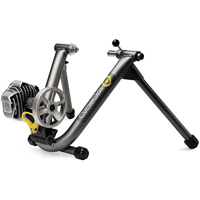
Both units can be folded up compactly and stored easily in a closet or corner. If you are planning on hauling the trainer around with you, the CycleOps Fluid2 is the lightest at 18 lbs compared to the 23 lbs. of the Kurt Kinetic Road Machine. To the Kinetic’s defense, the weight is because it has the beefiest frame tubing and a heavier flywheel – both of which play roles in why the Road Machine feels so solid and stable.
Price:
The MSRP of the CycleOps Fluid2 is $350, the MSRP of the Kurt Road Machine is $380. We often have additional promotions going that bring the price down. Call or visit a Fit Werx location for the current price and promotions.
Options and Accessories:
* Electronics & Apps: One nice thing about the progressive resistance range inherent to fluid designs is that power is pretty predictable; the Kurt Kinetic InRide Sensor or the CycleOps PowerCal Power kit can each provide virtual power information relatively inexpensively.
In addition to what each company offers on their own, a host of compatible apps to further enhance data and the training experience are available for both trainers from companies like Trainer Road.
* Kurt Kinetic Wheel Adapters and Rock & Roll: Kurt offers an adapter that all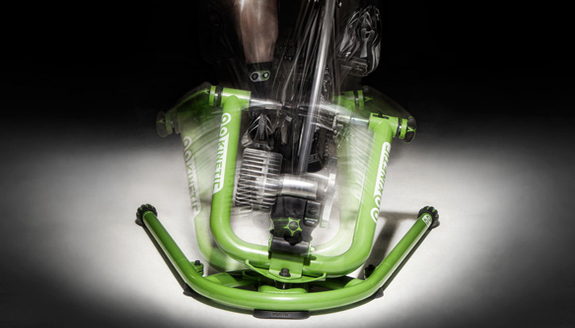 ows 16-24” wheels to be used in the trainer, an excellent choice for children’s bikes or non-traditional designs. Kurt also offers another version of the Road Machine called “Rock & Roll” that allows for natural side-side motion while training to promote balance and core work.
* Included Extras: Both units include a steel skewer that we highly recommend using and also an introductory training video.
* Tires: Continental and others make trainer specific tires with a rubber compounds designed to minimize noise and maximize wear on trainers. Regardless, we do not recommend using your nice Kevlar race tire…
* Other Accessories: With the Kurt or CycleOps, you will also want to consider getting a front wheel block ($10-$30) so you do not have to use an unstable phone book to keep your wheels reasonably level. A good collection of training videos from Spinervals or CTS ($30-$40 each) helps you stay focused and make the most of your training time inside.
Our Top Pick:
Both of these companies produce a solid product – we would not carry them otherwise.
The CycleOps Fluid2 started the whole fluid trainer revolution and we give the design a lot of credit for changing the way we all look at trainers and showing just how smooth and progressive a trainer can be. It was the car in a world of horse drawn carriages; it is a proven performer to this day that has seen many improvements in quality and durability over the years.
We have always really liked the Kurt Kinetic Road Machine as it is proven, rides smooth and progressively and gives one heck of a workout. The Road Machine 2.0 still has the most stable base and frame design and their sealed resistance unit remains a well thought out reliable performer.
You won’t go wrong with either of these trainers and what works best for you may be determined by how well one unit does in one of the above categories compared to the others. If you are going to leave the trainer and bike in one place most of the time, the Kurt Kinetic Road Machine 2.0 has a slight edge due to its stable oversized frame; smooth progressive ride; the ability to adapt to wheels smaller than 650c and cool optional InRide Sensor. On the other hand, the CycleOps Fluid2 still works really well. It is the quietest; offers a lighter and easier to transport design; a quicker securing mechanism; the “Made in the USA” stamp; and is packaged in a more environmentally conscious manner. Both trainers offer a linear resistance curve and integrate with power measurement apps/computers, albeit differently. So, there likely isn’t a “wrong answer” in either case for many riders, but some of the details may swing you one way or the other.
If all else fails, you can choose based on color. The subtle grey of the CycleOps Fluid2 and the blinding neon green of the Kurt Kinetic Road Machine 2.0 is one place where these two fine trainers are clearly different.
To order a trainer and/or trainer accessories, stop-in or contact a Fit Werx location! We’re happy to ship anywhere in the U.S.A. and we carry great trainers from brands including CycleOps, Kurt Kinetic, BKool and Kickr’.
Stationary Trainer Overview
Why Power Diminishes When Riding Indoors
Contact Us Here
